


Choosing to seek help for addiction is one of the most courageous steps a person can take. But for many, the fear of losing a job or falling behind in school or life responsibilities is enough to delay that decision. The good news is—you don’t have to choose between your career and your recovery.
Outpatient rehab provides a flexible treatment model that lets you work, attend school, or manage your family responsibilities while still receiving comprehensive care. At Freedom Recovery, we specialize in outpatient programs that meet you where you are, so you can recover while staying active in your life.
What Is Outpatient Rehab and How Does It Work?
Outpatient rehab is a structured addiction treatment program that offers clinical support without requiring you to live at the facility. Unlike inpatient treatment, you attend scheduled therapy, medical appointments, and group sessions, then return home each day.
At Freedom Recovery, we offer:
- Alcohol Addiction Treatment in Ohio
- Drug Addiction Treatment Programs in Ohio
- Dual diagnosis care for mental health and addiction
- Medication-Assisted Treatment (MAT)
- Flexible scheduling for working adults, parents, and students
Types of Outpatient Programs Offered at Freedom Recovery
1. Standard Outpatient Treatment (OP)
Designed for individuals with stable recovery progress, OP includes:
- 1–3 sessions per week
- Individual and group therapy
- Flexible scheduling (morning, evening, or weekends)
- Focus on relapse prevention and long-term goals
2. Intensive Outpatient Program (IOP)
Ideal for individuals who need more structure, IOP includes:
- 3–5 sessions per week
- 2–4 hours of programming per day
- Therapy, skill-building, and psychiatric care
- Balance between clinical support and real-life application
Both programs are highly effective and allow for continued employment during treatment.
Can You Really Work While in Outpatient Rehab?
Yes. In fact, maintaining work during treatment can be beneficial to the recovery process. Outpatient rehab is designed to support this lifestyle by offering flexible scheduling and personalized treatment plans.
Benefits of Working During Treatment:
- Maintains structure and accountability
- Promotes self-worth and routine
- Provides financial stability
- Allows real-time application of coping skills
At Freedom Recovery, we help you design a treatment schedule that fits around your work hours, not the other way around.
Legal Protections and Employment Rights While in Rehab
Worried about losing your job while getting help? You’re not alone—but you are protected.
1. Family and Medical Leave Act (FMLA)
Under FMLA, eligible employees can take up to 12 weeks of unpaid, job-protected leave for medical reasons, including substance use treatment. You:
- Don’t have to disclose your diagnosis
- Can take time off for rehab and return to the same or an equivalent role
- Are protected from termination due to seeking medical care
2. Americans with Disabilities Act (ADA)
The ADA prevents employers from discriminating against individuals in recovery. If you’re actively participating in treatment and no longer using illicit substances, the ADA may:
- Require reasonable accommodations
- Protect you from unfair termination or demotion
3. Short-Term Disability or Employee Assistance Programs (EAPs)
Some employers offer short-term disability or EAPs that:
- Provide confidential support for addiction
- Cover a portion of your income during treatment
- Help you transition back to work with support
Our team at Freedom Recovery can assist you in navigating workplace policies and provide any documentation or guidance needed to ensure a smooth transition into treatment.
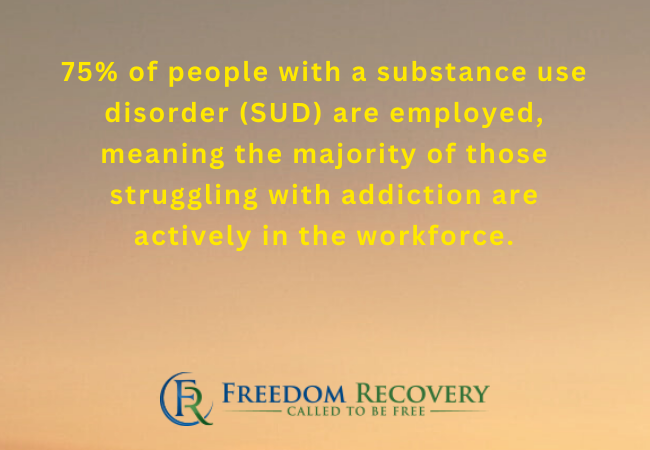
How to Balance Work and Recovery
1. Prioritize Scheduling
We’ll help you create a treatment plan that fits your life. You can choose sessions early in the morning, in the evening, or on weekends to maintain work commitments.
2. Open Communication (If You’re Comfortable)
While you’re not required to tell your employer, sharing your situation—especially if you’re protected by FMLA—can help you:
- Access time off or reduced schedules
- Avoid misunderstandings
- Protect your job
3. Treat Work as a Recovery Asset
Working while in recovery builds confidence, routine, and financial independence. Our clients often report that staying employed gave them:
- Purpose and direction
- Less time for cravings or idle thinking
- Better focus on goal-setting
What to Expect from Outpatient Rehab While Working
A typical outpatient schedule at Freedom Recovery might look like:
| Day | Morning | Work Hours | Evening |
|---|---|---|---|
| Mon | Therapy Session (8–10am) | Work (10:30am–5pm) | Peer Support Group (6pm) |
| Tue | Work (9am–5pm) | — | IOP Session (6–9pm) |
| Wed | Medical Check-In (9am) | Work (10am–4pm) | Rest/Self-Care |
| Thu | IOP Group (7–10am) | Work (11am–6pm) | Relapse Planning |
| Fri | Therapy (8am) | Work (10am–4pm) | Alumni Meeting (optional) |
| Sat/Sun | Optional Family Counseling or Peer Groups | Free Time or Part-Time Work | Recovery Activities |
How Employers Can Be Allies in Your Recovery Journey
Many people fear that seeking treatment will lead to judgment or job loss—but in reality, many employers today recognize the value of supporting employees through recovery. Substance use disorders affect productivity, workplace safety, and team morale, and employers have strong incentives—both ethical and practical—to help team members access treatment.
Here’s how your employer may support your recovery:
-
Employee Assistance Programs (EAPs): Many companies offer confidential support services, therapy referrals, or connections to outpatient treatment providers.
-
Flexible Scheduling: Adjusting work hours so you can attend treatment without losing wages.
-
Protected Leave: Under the Family and Medical Leave Act (FMLA), you may qualify for job-protected leave to enter treatment.
-
Return-to-Work Planning: Employers may help ease your transition post-treatment by offering phased returns or modified responsibilities.
Why Choose Freedom Recovery for Outpatient Rehab in Ohio?
At Freedom Recovery, we know that your life can’t stop for recovery—and it shouldn’t have to. As a premier drug rehab center in Ohio, we specialize in helping clients heal while maintaining their everyday responsibilities.
Here’s what makes us different:
- Flexible scheduling for real-life recovery
- Evening and weekend sessions for working professionals
- Licensed therapists and medical providers onsite
- Dual diagnosis care for addiction and mental health
- Employer documentation and FMLA support available
- Aftercare and alumni community to support long-term growth
Whether you’re pursuing alcohol rehab in Ohio, managing a dual diagnosis, or stepping down from inpatient care, we’re here to help you recover—while you keep moving forward in life.
Conclusion
You don’t have to put your life on pause to start healing. Outpatient rehab at Freedom Recovery allows you to keep your job, honor your responsibilities, and rebuild your life from the inside out—on your schedule.
If you’ve been waiting to get help because of work obligations, now’s the time. With professional flexibility, legal protections, and compassionate care, you can pursue recovery without sacrificing your stability. Call us today at 614.754.8051 to speak with an admissions specialist to learn more about our outpatient treatment programs in Ohio and take the first step toward healing—on your terms. You can work. You can recover. And you don’t have to do it alone.
FAQ on Working While in Outpatient Rehab
Can I keep my job while attending outpatient rehab?
Yes. Outpatient rehab is specifically designed to allow you to attend therapy while continuing your job, education, or family duties. Freedom Recovery offers flexible scheduling to fit around your work hours.
What is the time commitment for outpatient rehab?
It depends on your level of care:
-
Standard outpatient: 1–3 sessions per week
-
Intensive Outpatient Program (IOP): 3–5 days per week, 2–4 hours/day
We tailor your schedule based on your availability and treatment needs.
Will my employer find out I’m in treatment?
Not unless you choose to tell them. Your treatment is 100% confidential. If you need time off, you may be eligible for FMLA job protection, and we can provide documentation upon request.
What if I work full-time—can I still attend rehab?
Yes. Many of our clients work full-time. We offer evening and weekend sessions to make treatment accessible for professionals, parents, and busy adults.
Does outpatient rehab affect my job performance?
Quite the opposite—most clients find that recovery improves focus, energy, and performance at work. We help you manage stress, rebuild confidence, and maintain work-life-recovery balance.
Will I have legal protection if I take time off for treatment?
Yes, under the Family and Medical Leave Act (FMLA) and Americans with Disabilities Act (ADA), eligible individuals may receive job protection and reasonable accommodations during recovery.
Can outpatient rehab include mental health treatment?
Absolutely. We offer dual diagnosis care, including therapy and psychiatric support for conditions like depression, anxiety, PTSD, and more—all while you continue working.
What if I relapse while working? Can I still come back to treatment?
Yes. Relapse is part of many recovery journeys. We’ll adjust your treatment plan and increase support if needed—without judgment.
Do I need to inform my employer or HR?
No, but if you’d like to explore workplace accommodations or protected leave, our team can help with documentation and HR communication.