


Choosing outpatient rehab for addiction treatment provides incredible flexibility, allowing you to maintain your daily life while recovering from substance abuse. However, this flexibility also requires a significant commitment to personal accountability—something that can feel overwhelming without the right guidance and structure.
At Freedom Recovery, a leading addiction recovery center in Ohio, we understand that success in outpatient rehab Ohio depends heavily on accountability. Whether you’re participating in traditional outpatient care, intensive outpatient rehab Ohio, or utilizing innovative telehealth addiction treatment in Ohio, maintaining accountability is essential to achieving lasting sobriety.
In this comprehensive guide, we explore detailed strategies, practical tips, and valuable resources to help you stay accountable throughout your outpatient rehab journey.
Understanding the Role of Accountability in Outpatient Rehab
Outpatient rehab differs significantly from inpatient programs. Instead of living onsite at a drug rehab center in Ohio, you continue living at home, attending scheduled therapy sessions, and managing your day-to-day responsibilities independently.
Why Accountability Matters
- Prevents Relapse: Regular check-ins, clear goals, and personal accountability reduce the risk of relapse by helping you recognize and respond quickly to triggers.
- Improves Treatment Engagement: Being accountable means actively participating in therapy and treatment sessions consistently.
- Builds Trust: Staying accountable fosters trust with your therapists, family, and peers, creating a supportive recovery network.
- Strengthens Personal Responsibility: Accountability reinforces your commitment to recovery, helping you regain control over your life and decisions.
Key Strategies for Staying Accountable in Outpatient Rehab
Staying accountable requires specific, deliberate strategies. Here’s a detailed look at methods proven to help individuals successfully maintain accountability throughout outpatient rehab.
1. Set Clear, Specific, and Measurable Goals
Recovery involves breaking old patterns and developing new, healthier habits. Clearly defined goals help you measure progress, providing continuous motivation.
Examples of Clear Goals:
- Attend every scheduled counseling session.
- Join a weekly support group.
- Implement daily meditation or mindfulness practice.
- Identify and manage specific triggers.
At Freedom Recovery, goal-setting is an integral component of our personalized substance abuse counseling in Ohio.
2. Consistently Engage in Telehealth Addiction Treatment
Telehealth has transformed outpatient care, especially in Ohio, by eliminating common barriers like transportation, busy schedules, or distance from treatment centers.
Benefits of Telehealth Addiction Treatment in Ohio:
- Increased access and flexibility.
- Enhanced confidentiality and comfort.
- Greater consistency in attending therapy.
- Immediate support during difficult moments or cravings.
Research shows that telehealth significantly improves accountability and treatment adherence by making therapy readily accessible from home.
3. Develop and Use an Accountability Network
Recovery thrives with community support. Developing a network of people you trust—family, friends, peers, and counselors—strengthens accountability and emotional resilience.
Tips for Building Your Network:
- Participate regularly in group therapy at your addiction treatment center Ohio.
- Connect with peer recovery groups like AA, NA, or SMART Recovery.
- Establish regular check-ins with supportive friends or family members.
- Be transparent and honest with your accountability partners.
Freedom Recovery’s outpatient programs emphasize building these crucial connections through group and family therapy sessions.
4. Maintain Transparent and Honest Communication
Being honest, even when it’s uncomfortable, significantly boosts your chances of successful recovery.
Ways to Ensure Honesty in Recovery:
- Share openly during therapy sessions.
- Immediately address setbacks or slip-ups.
- Keep open communication lines with family or loved ones.
- Regularly discuss progress and challenges during your substance abuse counseling in Ohio sessions.
5. Leverage the Structure of Intensive Outpatient Rehab Ohio (IOP)
If standard outpatient therapy feels insufficient, the intensive outpatient rehab Ohio model offers additional structured support, ensuring frequent therapist interactions and regular accountability checks.
Benefits of Intensive Outpatient Rehab:
- Consistent, structured scheduling.
- Frequent professional check-ins.
- Comprehensive therapy (individual, group, family).
- Greater supervision for managing severe cravings or triggers.
Tools and Techniques to Support Accountability
Practical tools and techniques significantly enhance your accountability throughout outpatient rehab.
Recovery Journals and Diaries
Maintaining a recovery journal helps track emotional patterns, coping strategies, and personal growth.
Things to Include:
- Daily reflections and emotional check-ins.
- Logs of cravings, triggers, and successful coping methods.
- Notes from therapy sessions.
Mobile Apps for Recovery
Modern recovery apps offer daily reminders, track sobriety milestones, provide telehealth access, and support meditation and mindfulness exercises.
Recommended Apps:
- Sobriety counters and trackers.
- Mindfulness and meditation applications.
- Telehealth video call platforms for therapy.
Scheduled Daily Check-Ins
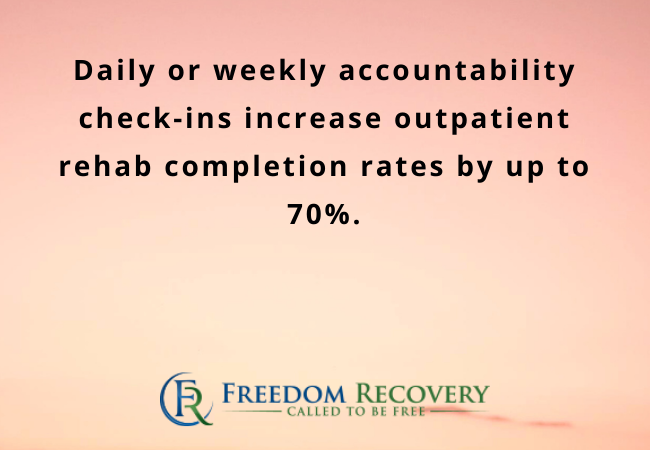
Consistently checking in with someone—a therapist, friend, or family member—reinforces daily accountability, providing an extra layer of support.
The Importance of Family in Maintaining Accountability
Addiction affects the entire family. Involving family in recovery enhances accountability, fosters understanding, and strengthens your support network.
Family Support Strategies:
- Attending joint family counseling sessions.
- Participating in educational programs about addiction and recovery.
- Establishing structured accountability routines at home.
Research indicates that family involvement doubles the likelihood of sustained long-term recovery.
Managing Setbacks and Maintaining Accountability
Setbacks are common in recovery but do not indicate failure. Accountability means constructively managing these moments rather than hiding or denying them.
Tips for Staying Accountable During Setbacks:
- Immediately communicate with your counselor or support network.
- Identify what triggered the setback.
- Adjust your coping strategies to avoid future incidents.
- Increase frequency of therapy sessions if needed.
Developing a Personalized Accountability Plan with Freedom Recovery
At Freedom Recovery, accountability is not a one-size-fits-all approach. Our comprehensive drug addiction treatment program in Ohio includes creating personalized accountability plans tailored to your specific needs, lifestyle, and recovery goals.
Elements of Your Personalized Plan:
- Clearly defined short-term and long-term recovery goals.
- Regular individual and group counseling sessions.
- Family involvement strategies.
- Utilization of telehealth treatment options.
- Scheduled accountability check-ins.
- Strategies for addressing triggers and relapse prevention.
Why Choose Freedom Recovery for Outpatient Rehab in Ohio?
Freedom Recovery stands out as a premier choice for outpatient rehab in Ohio by emphasizing personalized accountability throughout every stage of recovery.
- Personalized Treatment: Custom accountability plans tailored to each individual’s needs.
- Telehealth Accessibility: Comprehensive virtual services ensuring easy, consistent access to treatment.
- Family-Focused Approach: Integrated family counseling and support programs.
- Comprehensive Aftercare: Long-term accountability and support extending beyond initial rehab.
- Experienced, Compassionate Team: Licensed therapists and counselors dedicated to your success.
Conclusion
Outpatient rehab provides invaluable flexibility—but accountability is the foundation for making outpatient treatment successful. Clear goals, consistent engagement, honesty, family involvement, and practical tools like telehealth treatment and recovery journaling ensure accountability stays strong throughout your journey.
At Freedom Recovery, an established addiction recovery center in Ohio, we’re committed to empowering you every step of the way. Whether through traditional outpatient care, structured intensive outpatient programs, or flexible telehealth sessions, we provide comprehensive, compassionate care to help you achieve lasting sobriety.
Take your first step toward lasting recovery today. Contact Freedom Recovery at 614.754.8051 to learn more. Your recovery matters, and at Freedom Recovery, you’ll never walk the path alone.
FAQ on Accountability in Outpatient Rehab
Why is accountability important in outpatient rehab?
Accountability keeps you focused, honest, and engaged in your recovery process, significantly reducing relapse risks and enhancing overall treatment effectiveness.
How does Freedom Recovery help clients stay accountable?
We offer personalized accountability plans, structured outpatient schedules, frequent counseling sessions, telehealth treatment options, and family involvement to help clients maintain consistent accountability.
What role does telehealth play in accountability?
Telehealth addiction treatment in Ohio provides flexible, accessible, and consistent therapy, reducing barriers to regular treatment and significantly improving accountability and engagement.
Can I stay accountable even with severe addiction?
Yes, structured intensive outpatient rehab (IOP) at Freedom Recovery provides more frequent support, structured schedules, and comprehensive counseling, all designed to boost accountability even in severe addiction cases.
How often should I check in to maintain accountability?
Regular check-ins are essential—ideally daily or multiple times weekly. Frequency varies based on personal needs, treatment intensity, and stage of recovery.
What should I do if I relapse or experience setbacks?
Immediately communicate with your counselor or support network. Adjust treatment strategies, increase counseling frequency, and openly address triggers or causes to re-establish accountability quickly.