



Being sober—especially as a young adult—can feel like you showed up to a movie night only to find out everyone else brought snacks and you brought an apple. Fun? Not exactly. But you’re not alone. Choosing recovery is courageous, and the right addiction treatment program doesn’t just help you stop using; it teaches you how to live without substances and still feel like you—only steadier, clearer, and genuinely proud of it.
When young people walk into treatment, it isn’t because they’re fragile. It’s because they’re brave enough to trade short-term relief for long-term confidence. And that shift isn’t natural—it’s learned. Below, we unpack seven life-shaping skills that a quality addiction treatment program instills, including a grounded look at how recovery looks when you’re tired of pretending, exhausted from hanging on, and ready to be real.
Before we dive deeper, it’s worth noting that individuals seeking real support often look for an Addiction Treatment Program in Columbus as part of their journey. A focused setting like that blends evidence-based practices and peer learning to help you thrive beyond substance use.
1. Recognizing and Naming Your Emotions (Without the Numbing)
Many people use substances because emotions feel too loud, too sharp, or too unpredictable. Early recovery feels like emotional volume goes from mute to full blast. It’s overwhelming. An addiction treatment program teaches you to slow down long enough to identify what you’re actually feeling—not just what feels tolerable or avoidable.
In group sessions and therapy, you learn to parse out emotions that once blended into a fog:
- Is this sadness or disappointment?
- Am I stressed, or am I anxious?
- Is this guilt, or unresolved grief?
This distinction feels academic at first—but that clarity becomes the foundation for healthy coping. Instead of reaching for a quick fix, you learn how to sit with discomfort long enough to understand it, respond to it, and move through it.
You start to notice patterns in your emotional life—like that knot in your stomach before a social event or the tension in your jaw when someone crosses your boundary. Being able to name it reduces its power.
2. Setting Boundaries With Confidence (Not Fear)
In substance-using life, boundaries can be blurry because most people learn limits in the context of use: “I’ll drink if they drink,” or “I can handle myself.” In recovery, these old “rules” no longer work—but new ones aren’t intuitive at first.
A treatment program teaches how to set and uphold boundaries without fearing judgment, rejection, or loneliness. You learn practical skills like:
- How to say “No thanks” with calm assurance
- How to hold your ground when someone pressures you
- How to protect your peace without burning bridges
For young people, social life often centers around parties and shared substance use. It’s intimidating to say no and wonder if you’re now the “uncool” one. In treatment, you get real-time practice—not perfection—so you can walk out with tools that help you keep friendships without sacrificing your sobriety.
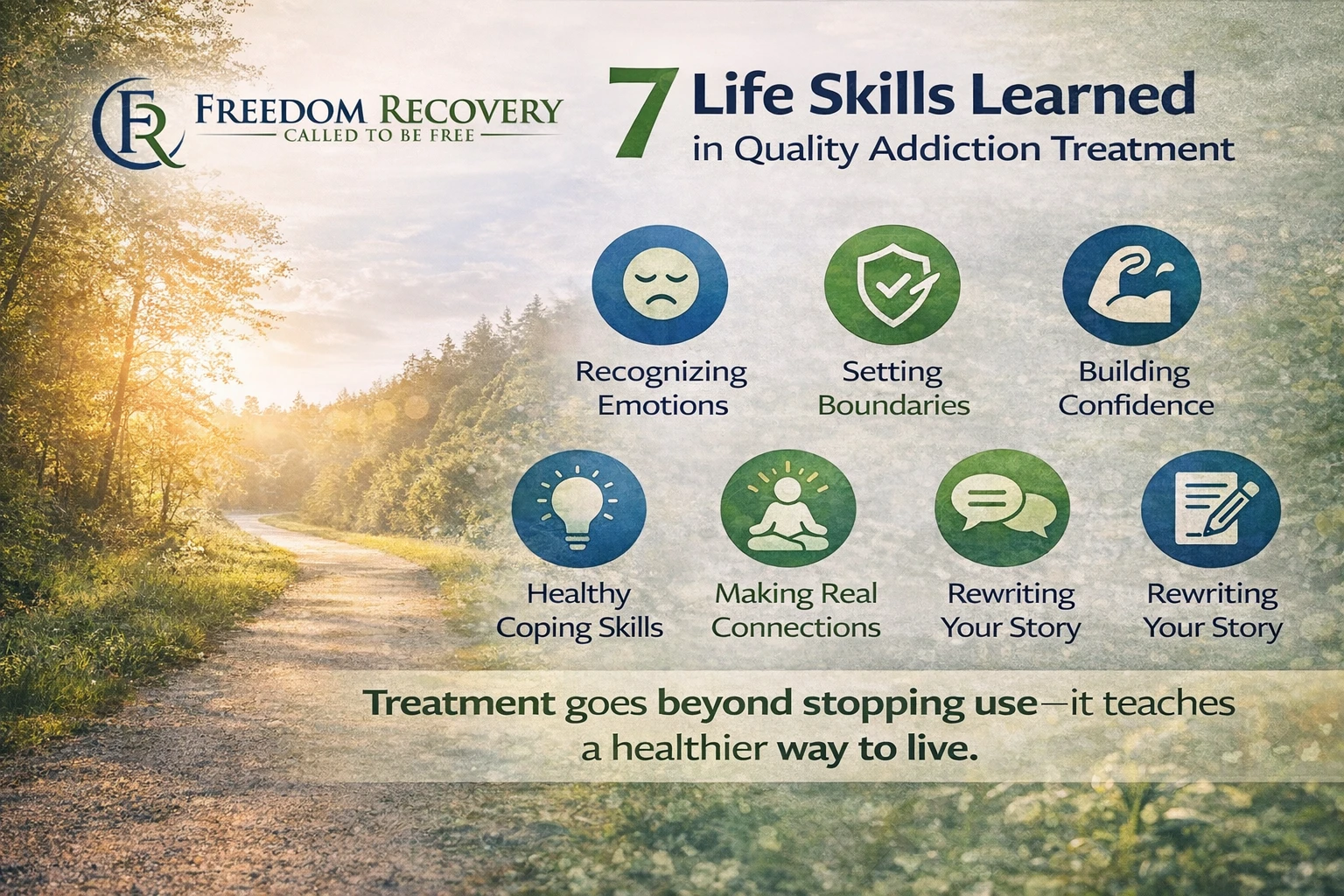
3. Building Confidence That Isn’t Fueled by a Buzz
Let’s be honest: when you’re young, confidence can feel tied to how many drinks you can handle, how funny you are when lit, or how fast you can disappear into the background. An addiction treatment program replaces that shaky confidence with something authentic.
Instead of leaning on substances to feel bold, likable, or brave, you learn:
- How to speak your truth
- How to make eye contact without freezing
- How to engage socially without needing a drink in hand
You start recognizing moments where you actually succeed without artificial support. That kind of confidence is stable because it’s built on real wins—like showing up, being present, and speaking from a place of honesty.
One of the best parts? Confidence built without substances doesn’t evaporate the next day.
4. Learning to Sit With Silence (Not Avoid It)
In early sobriety, silence can feel scary. It doesn’t hold judgment—it holds truth. Silence used to be filled with the soundtrack of substance use: music louder, voices louder, nights fuller, conversations busier. But now? You’re left with the unfiltered moment.
An effective treatment environment helps you sit in silence—not as punishment, but as space. Space to think. Space to feel. Space to reflect on who you are without a buffer. Initially, quiet feels like emotional exposure; later, it feels like grounding.
Silence teaches you:
- You can handle your thoughts
- You don’t need distraction to cope
- Hard feelings eventually pass
This skill isn’t glamorous, but it’s essential—because life isn’t always noise. And learning to be with yourself is one of the biggest confidence boosters recovery offers.
5. Developing Healthy Coping Skills (That Actually Work)
In addiction, substances were the go-to coping mechanism. When stress hit, you reached for something external to calm the internal struggle. Recovery flips that script. Now, coping has to be learned—from scratch.
An addiction treatment program gives you a toolkit. Not generic self-help ideas, but real, research-backed strategies like:
- Mindful breathing and grounding exercises
- Cognitive approaches to reshape thought patterns
- Journaling to track triggers and growth
- Movement and somatic practices to release tension
These tools don’t just distract; they transform. They help you face stressful moments and move through them instead of around them. Over time, these tools become automatic—so you no longer need a substance to make discomfort bearable.
6. Making Real Connections—Sober and Recognizable
Recovery isn’t just dropping a habit—it’s rediscovering connection. When your social life once revolved around substances, making sober connections feels strange at first. What do you talk about? How do you bond?
In treatment groups, you practice vulnerability and honesty with others who understand because they’re rebuilding too. You start to learn that human connection doesn’t need a buzz to feel warm. In fact, it often feels deeper.
Real connection teaches you:
- People like you for your presence, not your intoxication
- You can connect without numbing
- Shared experiences forge stronger bonds than shared substances
This skill doesn’t just help in recovery—it changes your relationships forever.
7. Rewriting Your Personal Story (Away From “The Addict”)
Many young people carry a narrative:
“I messed up.”
“I’m the weird one.”
“Everyone else has it easier.”
In recovery, part of the work is unpacking that story. In a treatment setting, you get space and support to examine the stories you tell yourself and—crucially—rewrite them with truth and self-compassion. You begin to see that your past doesn’t define you. Your growth does.
You learn to replace:
- “I can’t handle life sober” → “I’m learning how to live with clarity.”
- “I’m alone in this” → “Others are on this journey too.”
- “I failed” → “I’m rebuilding.”
That reframing shifts how you see yourself, interacts with the world, and show up in life.
What Real Confidence in Recovery Actually Feels Like
Confidence in recovery doesn’t mean you never feel fear, awkwardness, or insecurity again. It means that when those feelings show up, you:
- Notice them
- Name them
- Cope with them
- Keep moving forward
It’s less about being unshakeable and more about being steady. And that steadiness? It’s learned.
Frequently Asked Questions
Q: Will treatment make me feel confident right away?
Not immediately. Confidence isn’t an instant side effect—it’s a skill. Early treatment gives you tools, support, and practice. With time and consistent effort, genuine confidence takes root.
Q: Is confidence in recovery different from confidence with substances?
Yes. Confidence with substances is artificial and conditional—you feel bold only under the influence. Recovery confidence is earned, stable, and real.
Q: How long does it take to feel comfortable socially without substances?
There’s no fixed timeline. Some people feel more at ease in a few weeks; others take months. What matters most isn’t how long—it’s that you are practicing, showing up, and growing.
Q: What if I slip up—does that mean I lose all the skills I learned?
No. Setbacks feel discouraging, but they don’t erase growth. What treatment teaches you are tools to get back on track and understand what led to the slip, so you can adjust and move forward.
Q: Can I still be social and have fun in recovery?
Absolutely. Recovery doesn’t mean isolation. It means finding joy and connection in ways that don’t rely on substances. Many people discover that life feels richer—less chaotic and more present—once they learn how to be that way.
Choosing sobriety doesn’t make you weird—it makes you different. And in a culture that glorifies escape, choosing to show up sober is one of the bravest things a young person can do.
If you’re ready to grow confidence that lasts—and skills that help you live without substances—our addiction treatment program is designed to support that journey.
Call (888)643-7567 to learn more about our Addiction treatment program in in Columbus, Ohio.