



I don’t miss using.
That’s not the issue.
What caught me off guard was something quieter — the moment I realized the version of me who walked into treatment doesn’t fit anymore.
If you’ve been sober for years, you might understand that feeling.
You did the work. You rebuilt your life. You stabilized. And now… it feels flat.
Not broken. Not chaotic. Just small.
If you first found Freedom Recovery through their drug addiction treatment services, you probably remember how intense those early days were. Everything was urgent. Everything mattered.
But long-term recovery isn’t about urgency.
It’s about growth.
And growth feels different than survival.
The Version of You That Entered Treatment Was Built for Crisis
When I entered Drug Addiction Treatment, I was desperate.
I needed structure.
I needed accountability.
I needed someone to tell me what to do next.
That version of me was in survival mode. He was raw, scared, and highly motivated by consequences.
And that version of me saved my life.
But he was built for emergency.
Years later, I realized something uncomfortable:
I had outgrown him.
Stability Can Start to Feel Like Stagnation
No one prepares you for this stage.
You get sober. You rebuild. You stop self-destructing.
And then… life gets predictable.
You wake up. You work. You show up. You pay bills. You keep promises.
You do everything right.
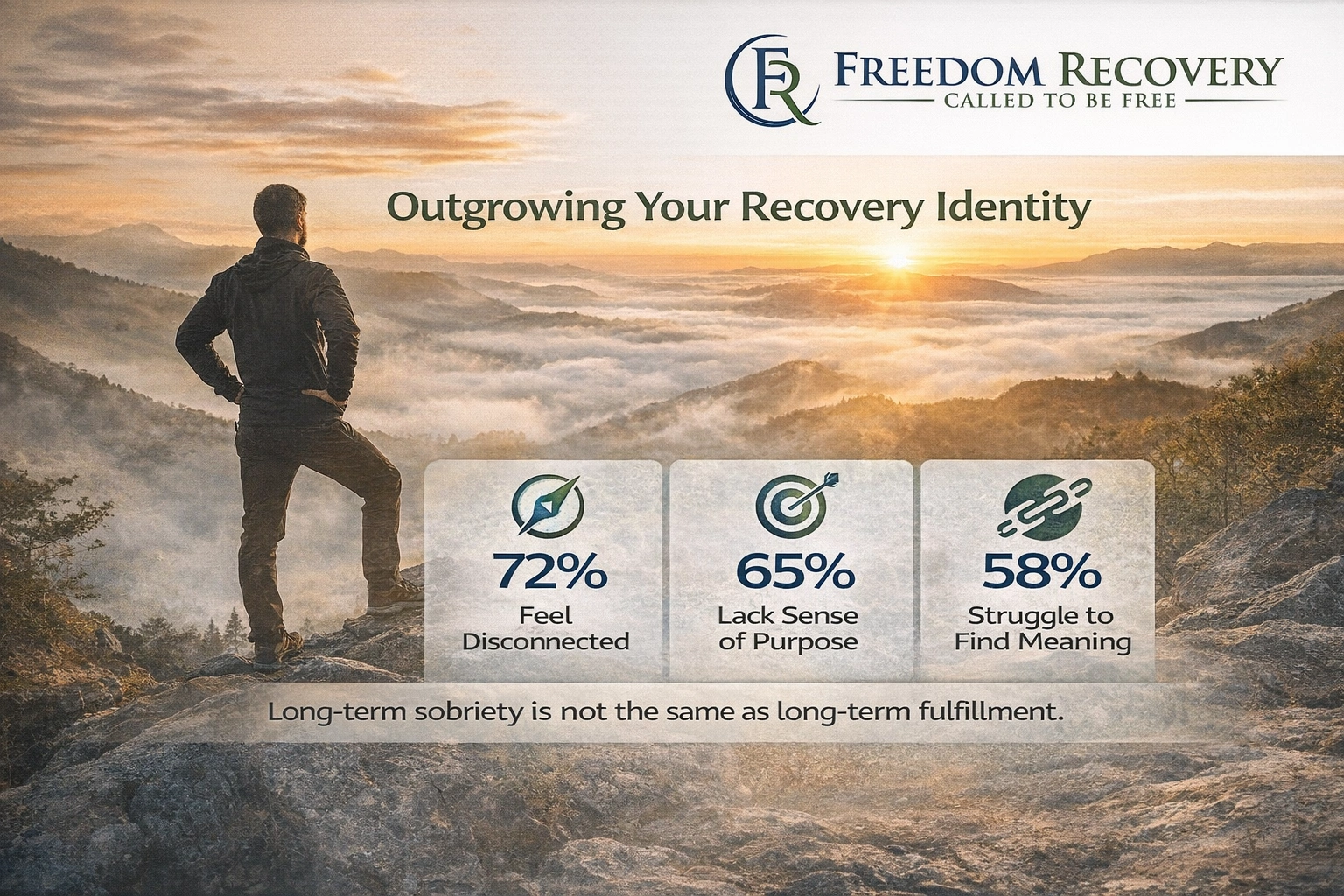
But internally, you might feel disconnected.
Not from sobriety.
From growth.
The adrenaline of early recovery fades. The dramatic before-and-after story settles. You’re no longer climbing out of a hole.
You’re standing still.
That stillness can feel unfamiliar.
“At Least I’m Sober” Isn’t Always Enough
I stayed stuck for a while because I kept telling myself:
“At least I’m sober.”
And that’s true. Sobriety is foundational.
But sobriety is the floor — not the ceiling.
If you feel flat, restless, or emotionally distant, that doesn’t mean you’re ungrateful.
It might mean you’re ready for the next layer of work.
For alumni in Grove City, Ohio, there’s ongoing care in Addiction that supports growth beyond stabilization. Re-engaging doesn’t mean you’re back at square one.
It means you’re expanding.
Outgrowing Your Recovery Identity
There’s a phase where your entire identity revolves around staying sober.
Meetings. Milestones. Language. Community.
At some point, though, sobriety becomes baseline.
And you might quietly wonder:
Who am I beyond this?
That question can feel destabilizing. You’ve spent years defining yourself by what you survived.
Now survival isn’t the central story anymore.
Growth is.
And growth requires different muscles.
Disconnection Isn’t the Same as Relapse
Let’s clear something up.
Feeling disconnected does not automatically mean you’re about to use.
Restlessness doesn’t equal regression.
In fact, it can signal maturity.
When the crisis is over, deeper issues surface:
- Purpose
- Identity
- Ambition
- Emotional intimacy
- Creativity
Early recovery focuses on stopping destruction.
Long-term recovery asks what you want to build.
Those are different conversations.
You Might Be Playing It Too Safe
Many long-term alumni shrink without realizing it.
You avoid risk because stability feels sacred.
You don’t change careers.
You don’t explore new relationships deeply.
You don’t revisit old wounds because “that was handled.”
But sometimes safety becomes stagnation.
The version of you that entered Drug Addiction Treatment needed safety.
The version of you now might need courage.
For individuals in Hilliard, Ohio, continued care in Addiction can provide space to explore growth without tearing down the stability you’ve built.
You don’t need a crisis to justify evolution.
The Grief of Outgrowing Your Old Self
Here’s the part people don’t talk about.
There can be grief in growth.
You might miss the urgency of early recovery. The camaraderie. The clarity of simple goals: just don’t use.
Life now is more complex.
The questions are bigger:
- What fulfills me?
- What scares me?
- What kind of relationships do I actually want?
- Who am I when I’m not fighting for my life?
Those questions can feel heavier than “don’t pick up.”
But they’re healthier.
Recovery Evolves — Whether You Do or Not
If you don’t intentionally evolve, recovery can start to feel repetitive.
Same routines. Same language. Same conversations.
Growth requires disruption — not destruction.
It might mean:
- Returning to therapy for deeper trauma work
- Exploring leadership roles
- Rebuilding family dynamics with new boundaries
- Taking emotional risks you once avoided
Long-term sobriety creates capacity.
The question is whether you use that capacity.
You’re Not Broken — You’re Expanding
Feeling stuck after years sober doesn’t mean something is wrong.
It means the skills that got you here aren’t the only ones you need.
The person who entered Drug Addiction Treatment was built to survive.
You’re built for more than survival now.
You’re built for depth.
For connection.
For meaning.
Expansion feels uncomfortable because it lacks the urgency of crisis. It asks for proactive growth instead of reactive defense.
That shift can feel lonely.
But it’s powerful.
Frequently Asked Questions
Is It Normal to Feel Disconnected After Years of Sobriety?
Yes. Many long-term alumni report feeling flat or restless once the crisis stage ends. Stability can expose deeper identity questions that weren’t accessible in early recovery.
Does Feeling Stuck Mean I’m About to Relapse?
Not necessarily. Disconnection often signals readiness for growth, not regression. It becomes risky only if ignored for too long without addressing underlying dissatisfaction.
Should I Return to Structured Support Even If I’m Still Sober?
Absolutely. Re-engaging in support is not a step backward. It can provide new therapeutic goals, deeper emotional work, and fresh perspective.
What’s the Difference Between Stability and Stagnation?
Stability supports growth. Stagnation avoids it. If you feel emotionally numb, creatively blocked, or disconnected from purpose, it may be stagnation — not stability.
How Do I Know It’s Time for a New Phase of Work?
If your inner dialogue has shifted from “stay sober” to “what’s next?” — that’s your signal. Growth questions mean you’ve moved beyond survival.
The Next Step Isn’t Dramatic — It’s Honest
You don’t need to implode your life to justify change.
You don’t need to relapse to earn attention.
You might simply need to admit:
“I’ve outgrown the version of me that got sober.”
That admission isn’t betrayal.
It’s evolution.
Recovery is not a fixed identity.
It’s a living process.
And you’re allowed to grow beyond the version of you that walked into Drug Addiction Treatment.
Call (888)643-7567 to learn more about our Drug Addiction Treatment in Columbus, Ohio.