



You’re not in crisis.
You haven’t lost your job.
You haven’t burned every bridge.
You haven’t hit a dramatic “rock bottom.”
But something has shifted.
You’re thinking about it more.
Using more intentionally.
Or trying to cut back — and noticing how hard that actually feels.
If you’ve been reading about Freedom Recovery’s drug addiction treatment services, this may not be about disaster.
It may be about prevention.
And prevention is powerful.
Step One: Stop Measuring Your Problem Against Someone Else’s
One of the biggest traps sober curious people fall into is comparison.
“I’m not as bad as that.”
“I still show up.”
“I still handle my responsibilities.”
But addiction doesn’t have to look catastrophic to be costly.
The real question isn’t how you compare to someone else.
It’s this:
Is your current pattern sustainable?
If your use is increasing, if you rely on it to regulate stress, if it occupies more mental space than it used to — those are meaningful indicators.
You don’t need to qualify for help through collapse.
You qualify through awareness.
Step Two: Notice the Subtle Escalation
Sober curiosity rarely begins with chaos.
It begins with quiet observations:
- It takes more to feel the same effect.
- You plan your day around when you can use.
- You feel irritable without it.
- You’ve tried to cut back — and didn’t.
- You hide or minimize your habits.
These are early signals.
Left alone, they intensify.
Addressed early, they stabilize.
For individuals in Columbus, Ohio, accessible treatment options in Addiction offer support before those early signs turn into consequences.
Early action protects what’s still intact.
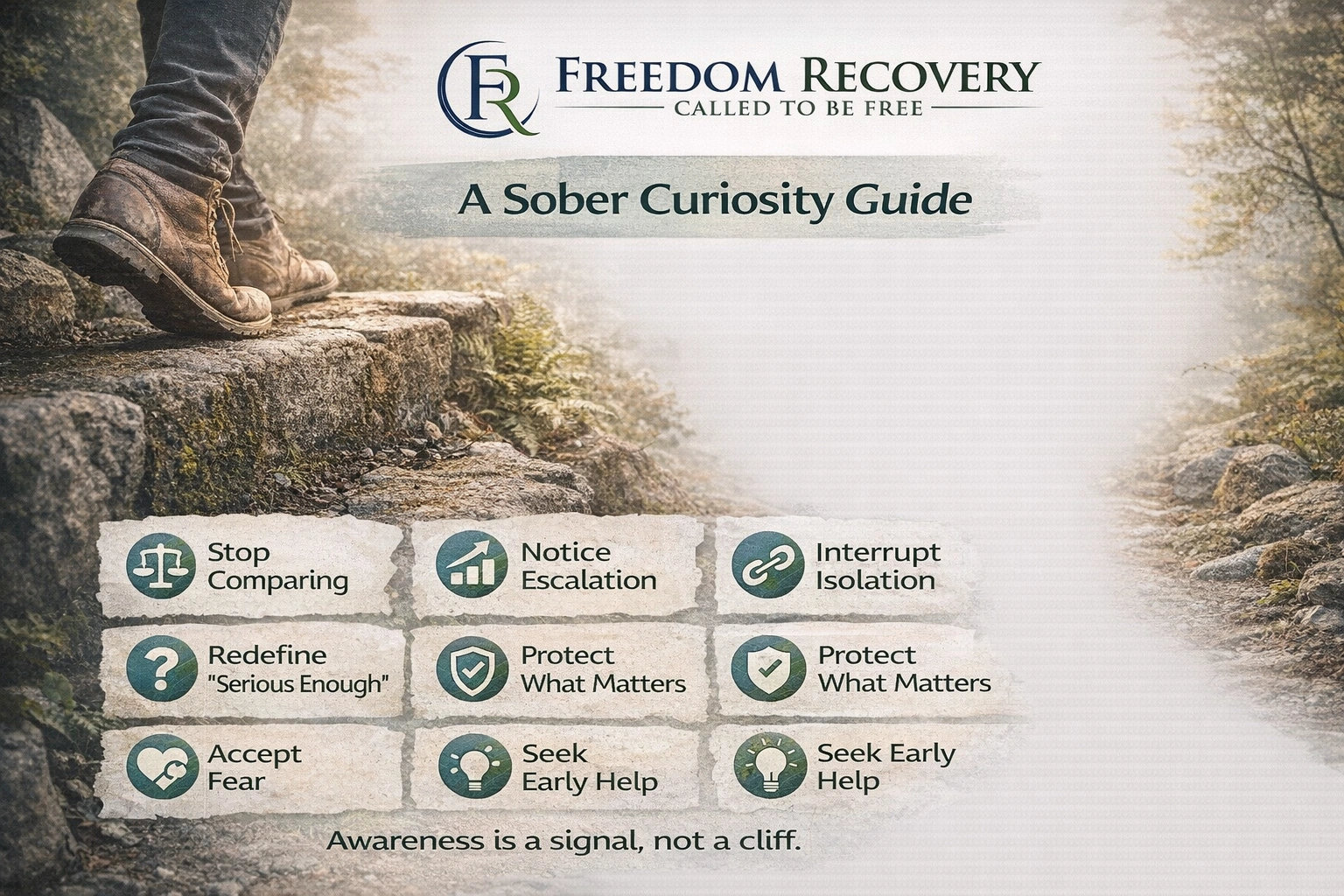
Step Three: Interrupt Isolation Before It Deepens
Addiction thrives in secrecy.
Even when you’re high-functioning, you may be managing it privately.
No one knows how often you think about it.
No one knows how uneasy you feel.
No one sees the internal negotiation.
Drug Addiction Treatment isn’t only about stopping a substance.
It’s about breaking isolation.
When you enter structured support early, you’re not admitting failure.
You’re choosing transparency before secrecy becomes suffocating.
Step Four: Stabilize Before the Nervous System Burns Out
Many sober curious individuals aren’t reckless.
They’re overwhelmed.
Stress accumulates. Sleep deteriorates. Anxiety rises. Substances become a tool for temporary relief.
The problem is that relief is borrowed.
And borrowed relief demands repayment.
Structured support helps regulate your nervous system without chemical shortcuts.
You learn to:
- Sleep without sedation
- Regulate anxiety without numbing
- Process stress without escalation
For those in Dayton, Ohio, compassionate care in Addiction supports that recalibration before burnout turns into breakdown.
You don’t have to wait until your body forces you to stop.
Step Five: Redefine What “Serious Enough” Means
You might still be asking:
“Is this bad enough?”
That question can delay help for years.
Instead, consider:
“Is this getting better on its own?”
If the answer is no — or if the pattern is slowly escalating — that matters.
Drug Addiction Treatment at this stage isn’t about crisis management.
It’s about course correction.
Small adjustments now prevent large corrections later.
Step Six: Protect Your Career, Relationships, and Health
When sober curious individuals seek help early, they often preserve:
- Professional credibility
- Family trust
- Physical health
- Financial stability
- Emotional clarity
Waiting until consequences appear publicly is far more disruptive.
Early intervention is quieter.
Strategic.
Proactive.
You don’t need a wake-up call.
You can choose awareness instead.
Step Seven: Accept That Fear Doesn’t Mean “Not Ready”
You may be afraid of:
- Being labeled
- Losing autonomy
- Facing emotions sober
- Failing
Fear does not mean you shouldn’t move forward.
It means something important is at stake.
The strongest step isn’t pretending you’re fearless.
It’s acting while afraid.
Step Eight: Understand That Early Treatment Is Different
Many people imagine treatment as dramatic and disruptive.
But entering Drug Addiction Treatment early often means:
- Less intensive care
- Shorter stabilization periods
- Lower risk of relapse severity
- Fewer legal or professional consequences
It’s easier to redirect than to rebuild.
The longer patterns solidify, the harder they are to interrupt.
Frequently Asked Questions
Do I Have to Identify as an Addict to Seek Help?
No. If your relationship with substances feels concerning, that’s reason enough to explore support. You don’t need a label to deserve clarity.
What If I’m Still Performing Well at Work?
Performance does not equal immunity. Many high-functioning individuals seek help before work is affected — and that early choice often preserves their success.
Is It Overreacting to Seek Help Early?
It’s proactive. You wouldn’t ignore early signs of a medical condition until hospitalization. Mental health and substance patterns deserve the same respect.
What If I’m Not Sure I Want to Quit Completely?
Exploration is allowed. You can discuss goals honestly. Treatment is collaborative, not coercive. Clarity often comes through structured support.
How Do I Know If Waiting Is Risky?
If use is increasing, control feels weaker, or you’re thinking about it daily, waiting increases risk. Early intervention lowers it.
You Don’t Need to Wait for Worse
Right now, you have awareness. That’s not small.
It’s powerful. The longer you wait, the more likely the pattern deepens.
The earlier you act, the more intact your life remains.
Drug Addiction Treatment isn’t about admitting defeat.
It’s about protecting your future before something else forces the decision.
Call (888)643-7567 to learn more about our Drug Addiction Treatment in Columbus, Ohio.