



You’re still closing deals.
Still answering emails.
Still making it to dinner.
From the outside, nothing looks broken.
And that’s exactly why you’ve been able to wait.
As a clinician, I’ve worked with executives, physicians, entrepreneurs, attorneys, and parents who looked completely “fine.” Many of them reviewed our treatment options more than once before they ever reached out.
They weren’t clueless.
They were calculating.
And waiting.
High-Functioning Doesn’t Mean Unaffected
You can be high-performing and still be unraveling.
You’re not getting arrested.
You’re not missing payroll.
You’re not the stereotype.
But maybe you are:
- Drinking earlier than you used to
- Using more to feel the same effect
- Waking up at 3 a.m. with dread
- Snapping at people you love
- Quietly wondering if this is sustainable
Functioning is not the same as thriving.
High-functioning addiction is often quieter — and more isolating.
Because no one intervenes when the machine is still running.
The Cost Is Slow — Until It Isn’t
Waiting rarely destroys your life overnight.
It erodes it.
You lose sleep first.
Then patience.
Then clarity.
Your mood narrows. Your world shrinks. Your stress tolerance thins.
You compensate with more caffeine. More control. More performance.
And more substance use.
From the outside, you look disciplined.
Inside, you’re exhausted from maintaining the image.
You’re Not in Denial — You’re Negotiating
Most high-functioning individuals aren’t denying there’s a problem.
They’re bargaining.
“I’ll cut back after this quarter.”
“I’ll stop during the week.”
“I’ll handle it myself.”
You tell yourself it’s not that bad because you can still perform.
But here’s what I’ve seen repeatedly:
The ability to perform does not equal the ability to sustain.
An addiction treatment program isn’t about labeling you.
It’s about interrupting the negotiation before it turns into collapse.
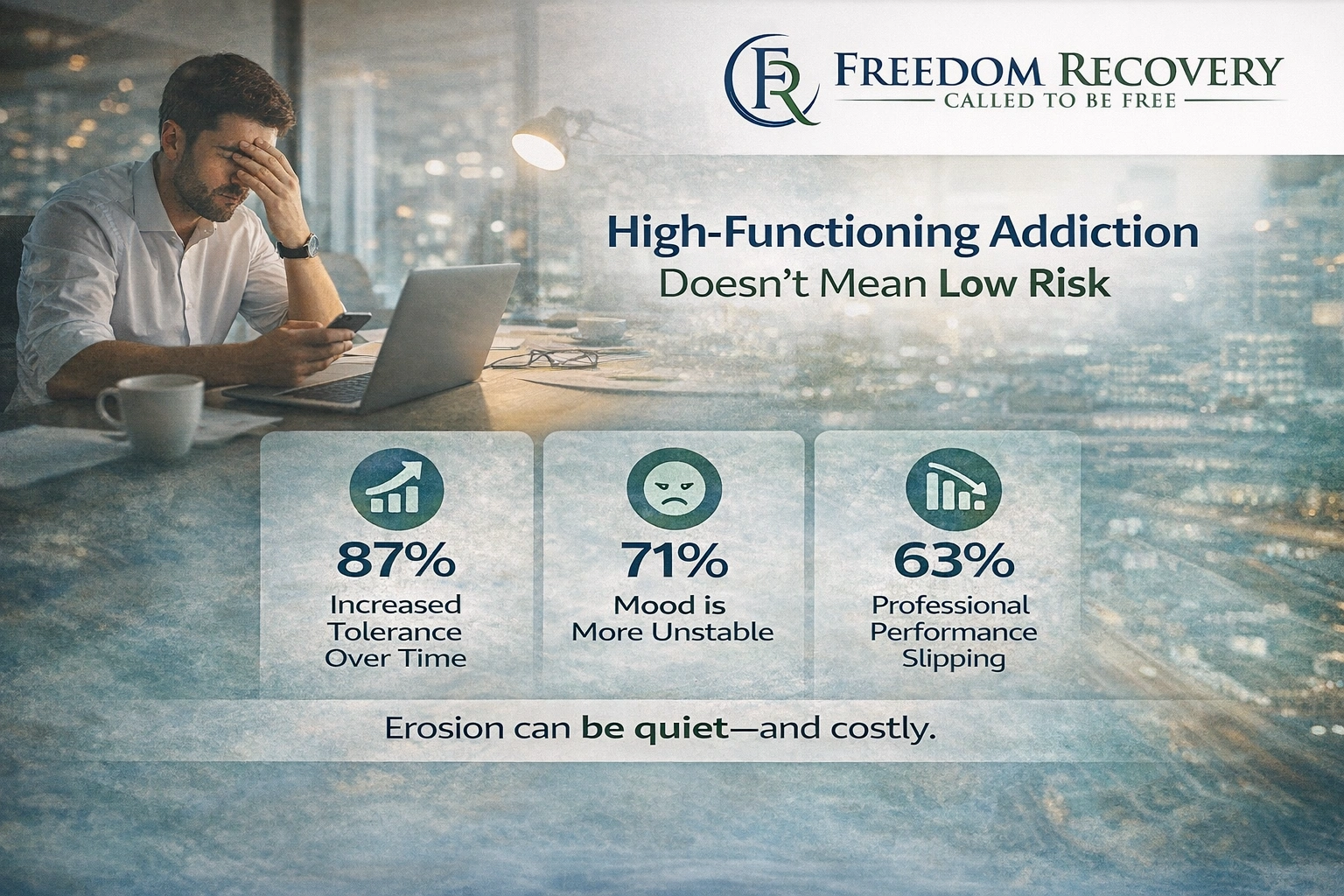
The Hidden Mental Load
High-functioning addiction is heavy.
You’re constantly calculating:
- How much you’ve had
- When you can have more
- Whether anyone noticed
- How to appear steady
That mental math is exhausting.
You’re not just managing a career.
You’re managing an image.
Structured support removes that constant calculation.
It gives your nervous system a break.
The Private Crash Comes First
The public collapse — if it comes — usually comes later.
The private crash happens first.
It’s the moment you realize you don’t feel joy without it.
The night you drink more than planned and scare yourself.
The argument you can’t undo.
The medical test you avoid scheduling.
You may still look successful.
But internally, something feels off.
For professionals near Upper Arlington, Ohio, accessible treatment options in Addiction provide a way to stabilize quietly — before the private crash becomes public.
Early intervention protects what you’ve built.
Waiting Doesn’t Prove Strength
There’s a dangerous belief among high achievers:
“If it were really that bad, I’d have lost more.”
That logic feels comforting.
But it confuses tolerance with control.
Your tolerance may be high. Your coping skills may be strong. Your discipline may be exceptional.
That doesn’t mean the trajectory is safe.
Tolerance increases over time.
So does risk.
Slowing Down Feels Like Threat
High performers equate movement with safety.
Progress. Productivity. Forward motion.
Entering an addiction treatment program can feel like hitting pause.
And pause feels terrifying.
What if people notice?
What if your career stalls?
What if you lose momentum?
But here’s the clinical reality:
Untreated addiction eventually forces a pause.
The only question is whether you choose it — or it chooses you.
For individuals in Columbus, Ohio, compassionate care in Addiction allows for stabilization while maintaining dignity and discretion.
You don’t have to implode to justify stepping in.
What I See When People Wait Too Long
I’ve watched high-functioning clients delay care for years.
Here’s what often happens:
- Blood pressure creeps up
- Anxiety becomes chronic
- Depression deepens
- Relationships grow distant
- Performance starts slipping
It’s subtle at first.
Then suddenly it isn’t.
The erosion accumulates quietly.
By the time someone says, “I should have come sooner,” the consequences are heavier.
Not irreversible.
But heavier.
You’re Tired of Holding It Together
Many high-functioning clients finally reach out not because they hit bottom — but because they’re tired.
Tired of monitoring.
Tired of hiding.
Tired of calculating.
Tired of pretending everything is fine.
You don’t need to destroy your life to qualify for help.
You need to admit you’re exhausted.
Structured care isn’t about stripping you of your identity.
It’s about stabilizing the part of you that’s overextended.
What Early Intervention Actually Preserves
When high-functioning individuals seek support earlier, they often preserve:
- Professional reputation
- Physical health
- Marriages and partnerships
- Parenting consistency
- Financial stability
Waiting feels safer.
But early action is usually safer.
An addiction treatment program can protect the life you worked hard to build.
Not replace it.
Protect it.
Frequently Asked Questions
If I’m Still Succeeding, Is It Really That Serious?
Sustained performance does not negate underlying damage. If substance use is increasing, impacting sleep, mood, or relationships, it’s worth evaluating before consequences escalate.
Will Entering Treatment Damage My Career?
Many professionals pursue structured care discreetly. Different levels of support allow flexibility. Early intervention often prevents the career disruptions that occur when issues are ignored too long.
What If I Can Cut Back on My Own?
Some individuals can. Many cannot sustain it long-term. If you’ve tried to moderate and found yourself returning to old patterns, that information matters.
Do I Have to Hit Rock Bottom First?
No. Rock bottom is not a clinical requirement. Earlier intervention typically leads to smoother recovery and fewer consequences.
What If I’m Afraid to Slow Down?
That fear is common. But slowing down temporarily can prevent a forced, much longer pause later.
The Question You’re Avoiding
At some point, you’ve probably asked yourself:
“Is this getting worse?”
If the honest answer is yes, waiting will not reverse it.
It will compound it.
You don’t need drama to justify help.
You don’t need collapse to earn support.
You need relief from the constant management.
An addiction treatment program isn’t a surrender.
It’s a strategic decision.
Call (888)643-7567 or visit our addiction treatment program in in Columbus, Ohio to learn more.