



You didn’t finish. Or maybe you just… stopped showing up.
That doesn’t mean you failed—it means something got hard.
If you’ve been wondering whether you can go back, you can. And not just technically—you can come back in a way that actually feels different this time.
Early on, it might help to revisit what intensive outpatient program iop services in Columbus, Ohio can look like when you return with more honesty, not more pressure.
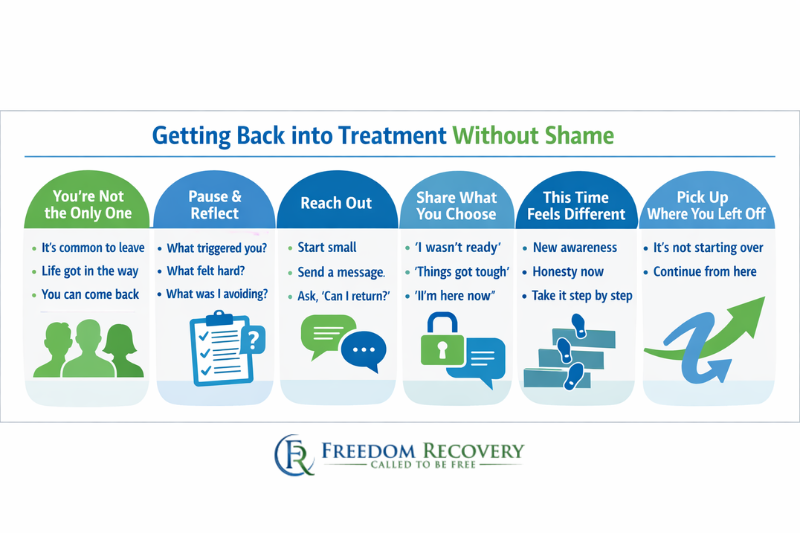
Start With This: You’re Not the Only One Who Left
People leave mid-treatment for all kinds of reasons.
It gets overwhelming.
Life pulls you back in.
Shame creeps up quietly.
Or something inside you says, “I’m not ready to look at this yet.”
As a clinician, I can tell you this plainly: walking away doesn’t disqualify you from coming back. It actually tells us where things got real for you—and that’s useful.
Not embarrassing. Useful.
Understand What Made You Leave (Without Judging It)
Before you think about re-entering, pause here.
Ask yourself:
- What felt hardest right before I stopped going?
- Was I avoiding something specific—or just the whole experience?
- Did I feel disconnected, judged, or overwhelmed?
You’re not trying to build a case against yourself.
You’re trying to understand your own threshold.
That insight matters more than perfect attendance ever did.
Reaching Back Out Doesn’t Have to Be a Big Moment
A lot of people imagine they need some dramatic reset to come back.
You don’t.
It can be as simple as:
- Sending a message
- Making a short call
- Asking, “Is it okay if I return?”
And here’s the part people don’t expect—most programs don’t respond with judgment. They respond with relief.
Because you came back.
You Don’t Have to Explain Everything
There’s a quiet fear that says: “They’re going to ask where I’ve been.”
Maybe they will. But not to interrogate you.
You can say as much or as little as you’re ready to share.
“I wasn’t ready.”
“Things got hard.”
“I want to try again.”
That’s enough to start.
This Time Might Feel Different—and That’s a Good Sign
Coming back isn’t about restarting from zero.
You’re returning with:
- More awareness of your triggers
- A clearer sense of what didn’t work
- A little more honesty, even if it’s uncomfortable
That changes how treatment lands.
What once felt overwhelming might now feel… familiar. Not easy—but familiar enough to stay.
A Quick Reality Check: You’re Still Allowed to Need Help
There’s a quiet myth that leaving treatment means you’ve used up your chance.
You haven’t.
If anything, this is exactly where continued care fits in—especially for people exploring post detox treatment options Ohio who aren’t ready for full-time, live-in care but still need structure.
Support doesn’t disappear just because you paused. It’s still there, waiting for you to step back into it.
If You’re Thinking About Coming Back, Start Small
You don’t have to commit to everything today.
Just take one step:
- Ask about re-entry options
- Explore flexible scheduling
- Consider starting with fewer days if that feels manageable
Some people even begin by reconnecting with treatment in Grove City or exploring nearby treatment options in Upper Arlington to find what feels most accessible again.
The goal isn’t to prove anything.
It’s to stay long enough for something to shift.
You’re Not Starting Over—You’re Picking Up Where It Got Hard
There’s a difference.
Starting over says you lost everything.
Picking back up says you learned something—and you’re willing to try again with that knowledge.
That matters more than a perfect timeline ever could.
Coming back after leaving takes a kind of honesty most people don’t talk about. If you’re even considering it, that’s already movement.
Call (888)643-7567 or visit the program page to learn more about our intensive outpatient program iop services in Columbus, Ohio and how to re-enter at your own pace.