



For many individuals struggling with opioid or alcohol addiction, the road to recovery can be overwhelming, especially when withdrawal symptoms and cravings make it difficult to stay sober. Medication-Assisted Treatment (MAT) offers a scientifically backed approach to addiction recovery by combining FDA-approved medications with behavioral therapy and counseling.
At Freedom Recovery, we integrate MAT into our drug addiction treatment program in Ohio as part of a comprehensive, evidence-based approach to help individuals regain control of their lives. Whether you’re considering alcohol rehab in Ohio, outpatient rehab, or intensive outpatient rehab in Ohio, MAT can significantly improve your chances of long-term sobriety.
What Is Medication-Assisted Treatment (MAT)?
MAT is a treatment approach that uses medications to stabilize brain chemistry, block the euphoric effects of alcohol and opioids, and reduce cravings and withdrawal symptoms. When combined with therapy, MAT enhances recovery success and lowers the risk of relapse and overdose.
Common Misconceptions About MAT
Despite its effectiveness, MAT is often misunderstood. Let’s debunk some common myths:
- Myth: MAT replaces one addiction with another.
Fact: MAT medications are carefully prescribed and monitored to help stabilize brain function without producing a high. - Myth: MAT is only for severe cases.
Fact: MAT can be used at any stage of addiction to help individuals safely manage withdrawal and cravings. - Myth: Recovery is only possible through abstinence.
Fact: Research shows that MAT improves long-term sobriety rates by making recovery more manageable.
How MAT Supports Recovery
1. Eases Withdrawal Symptoms and Reduces Cravings
Withdrawal is one of the biggest barriers to recovery. The physical and psychological discomfort can lead individuals to relapse. MAT provides relief from withdrawal symptoms, making the transition into drug rehab smoother.
Withdrawal Symptoms MAT Helps Manage:
- Opioid Withdrawal: Muscle pain, sweating, nausea, anxiety, insomnia.
- Alcohol Withdrawal: Tremors, hallucinations, seizures, high blood pressure.
By reducing these symptoms, MAT allows individuals to focus on therapy and long-term healing rather than struggling with withdrawal discomfort.
2. FDA-Approved Medications Used in MAT
At Freedom Recovery, our medical team carefully selects MAT medications based on each individual’s addiction history and treatment goals.
For Opioid Addiction (Heroin, Fentanyl, Prescription Painkillers):
- Methadone – Blocks the euphoric effects of opioids and reduces cravings.
- Buprenorphine (Suboxone, Subutex) – Helps manage withdrawal while preventing relapse.
- Naltrexone (Vivitrol) – Blocks opioid receptors, preventing any pleasurable effects from opioids.
For Alcohol Addiction:
- Disulfiram (Antabuse) – Causes nausea and discomfort when alcohol is consumed, acting as a deterrent.
- Acamprosate (Campral) – Helps individuals maintain sobriety by reducing cravings.
- Naltrexone (Vivitrol, Revia) – Blocks the pleasurable effects of alcohol, reducing the desire to drink.
Each medication is prescribed based on a thorough medical evaluation to ensure safety and effectiveness.
3. Enhances the Effectiveness of Therapy
MAT is most effective when combined with therapy. While medications help manage physical withdrawal and cravings, therapy addresses the underlying emotional and psychological causes of addiction.
Therapies Used Alongside MAT at Freedom Recovery:
- Cognitive Behavioral Therapy (CBT): Helps individuals change negative thought patterns that lead to substance use.
- Dialectical Behavior Therapy (DBT): Focuses on emotional regulation and distress tolerance.
- Group Therapy: Encourages peer support and shared recovery experiences.
- Trauma-Informed Therapy: Helps individuals process past traumas that may contribute to addiction.
MAT does not replace therapy—it enhances it by ensuring individuals are stable enough to fully engage in their treatment.
The Long-Term Benefits of MAT
MAT is not just about managing withdrawal; it also helps prevent relapse and support long-term recovery.
4. Reduces the Risk of Overdose and Relapse
Studies show that individuals who receive MAT:
- Are 50% less likely to die from an opioid overdose.
- Have a 60% higher success rate in long-term sobriety.
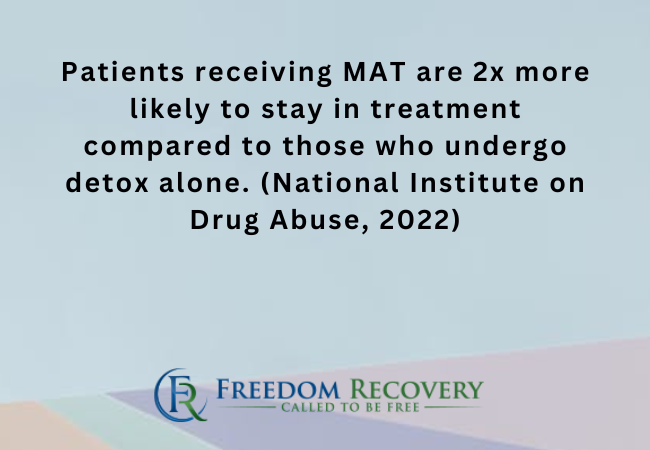
- Are twice as likely to stay in treatment compared to those who don’t receive MAT.
By preventing relapse and overdose, MAT saves lives and allows individuals to rebuild their future.
5. Supports Transition into Outpatient Rehab
For many individuals, MAT is used as part of a step-down approach, where they transition from inpatient care to outpatient rehab in Ohio.
Outpatient options that integrate MAT include:
- Intensive Outpatient Rehab in Ohio (IOP): A structured, yet flexible, approach for individuals balancing work, school, or family responsibilities.
- Standard Outpatient Treatment: A lower-intensity treatment with continued counseling and MAT support.
- Sober Living Programs: Safe housing environments that allow individuals to continue MAT while gradually reintegrating into everyday life.
By bridging the gap between residential treatment and independent living, MAT helps individuals stay on track during outpatient care.
Is MAT Right for You?
MAT is not a one-size-fits-all solution. A medical evaluation is necessary to determine if it’s the right option based on:
- The severity of addiction (opioids or alcohol)
- Past relapse history
- Co-occurring mental health conditions
- Current medications or health concerns
At Freedom Recovery, we conduct comprehensive assessments to determine whether MAT is a suitable addition to your treatment plan.
Why Choose Freedom Recovery for MAT?
At Freedom Recovery, we provide personalized, evidence-based addiction treatment that includes MAT when appropriate. Our drug rehab center in Ohio offers:
- 24/7 Medical Supervision for safe MAT implementation.
- Inpatient, Outpatient, and IOP programs that integrate MAT.
- Holistic and evidence-based therapies to support full recovery.
- Relapse prevention planning and aftercare support.
Our mission is to help individuals not just get sober, but stay sober—and MAT plays a vital role in that process.
Conclusion
Recovery is a journey, and Medication-Assisted Treatment (MAT) can make that journey safer, more manageable, and more successful. By reducing cravings, easing withdrawal symptoms, and supporting long-term sobriety, MAT helps individuals regain control of their lives.
At Freedom Recovery, we believe in a comprehensive approach to addiction treatment—one that combines evidence-based medications, therapy, and personalized care to give you the best chance at lasting recovery. Whether you’re considering alcohol addiction treatment in Ohio, drug rehab, or outpatient treatment, our team is here to guide you every step of the way.
You don’t have to fight addiction alone. If you or a loved one is struggling, take the first step toward a healthier future today. Call us now at 614.754.8051 to speak with a recovery specialist.
FAQ About MAT in Drug Rehab
What is Medication-Assisted Treatment (MAT)?
MAT is a treatment approach that combines FDA-approved medications with behavioral therapy and counseling to help individuals recover from opioid and alcohol addiction. It helps reduce withdrawal symptoms, control cravings, and prevent relapse.
How does MAT support recovery?
MAT provides stability in early recovery by:
- Easing withdrawal symptoms.
- Reducing cravings that lead to relapse.
- Allowing individuals to fully participate in therapy and rehab programs.
- Lowering the risk of overdose.
What medications are used in MAT?
For Opioid Addiction:
- Methadone – Blocks opioid effects and reduces cravings.
- Buprenorphine (Suboxone, Subutex) – Helps manage withdrawal and prevents relapse.
- Naltrexone (Vivitrol) – Blocks opioid receptors and prevents opioid highs.
For Alcohol Addiction:
- Disulfiram (Antabuse) – Causes unpleasant effects if alcohol is consumed.
- Acamprosate (Campral) – Reduces alcohol cravings.
- Naltrexone (Vivitrol, Revia) – Blocks alcohol’s pleasurable effects.
Who is eligible for MAT?
MAT is recommended for individuals struggling with opioid or alcohol addiction, especially those with a history of relapse, severe withdrawal symptoms, or co-occurring mental health disorders.
Does MAT replace one addiction with another?
No. MAT stabilizes brain function without creating a high, allowing individuals to focus on recovery. Medications are carefully prescribed and monitored to support long-term sobriety.
How long does MAT last?
The length of MAT varies based on individual needs. Some people use it for several months, while others may need long-term maintenance under medical supervision.
Can MAT be used in outpatient rehab?
Yes! MAT is commonly used in outpatient rehab programs, such as:
- Intensive Outpatient Rehab in Ohio (IOP) – A structured treatment program while living at home.
- Standard Outpatient Rehab – Continued counseling and MAT support.
- Sober Living Programs – Safe housing while continuing MAT treatment.